M1 microphone
A studio microphone I designed and built from scratch in Blender, then brought into the browser. Take it apart, switch its pickup pattern and hear the difference.

01 · Object
Twelve parts.
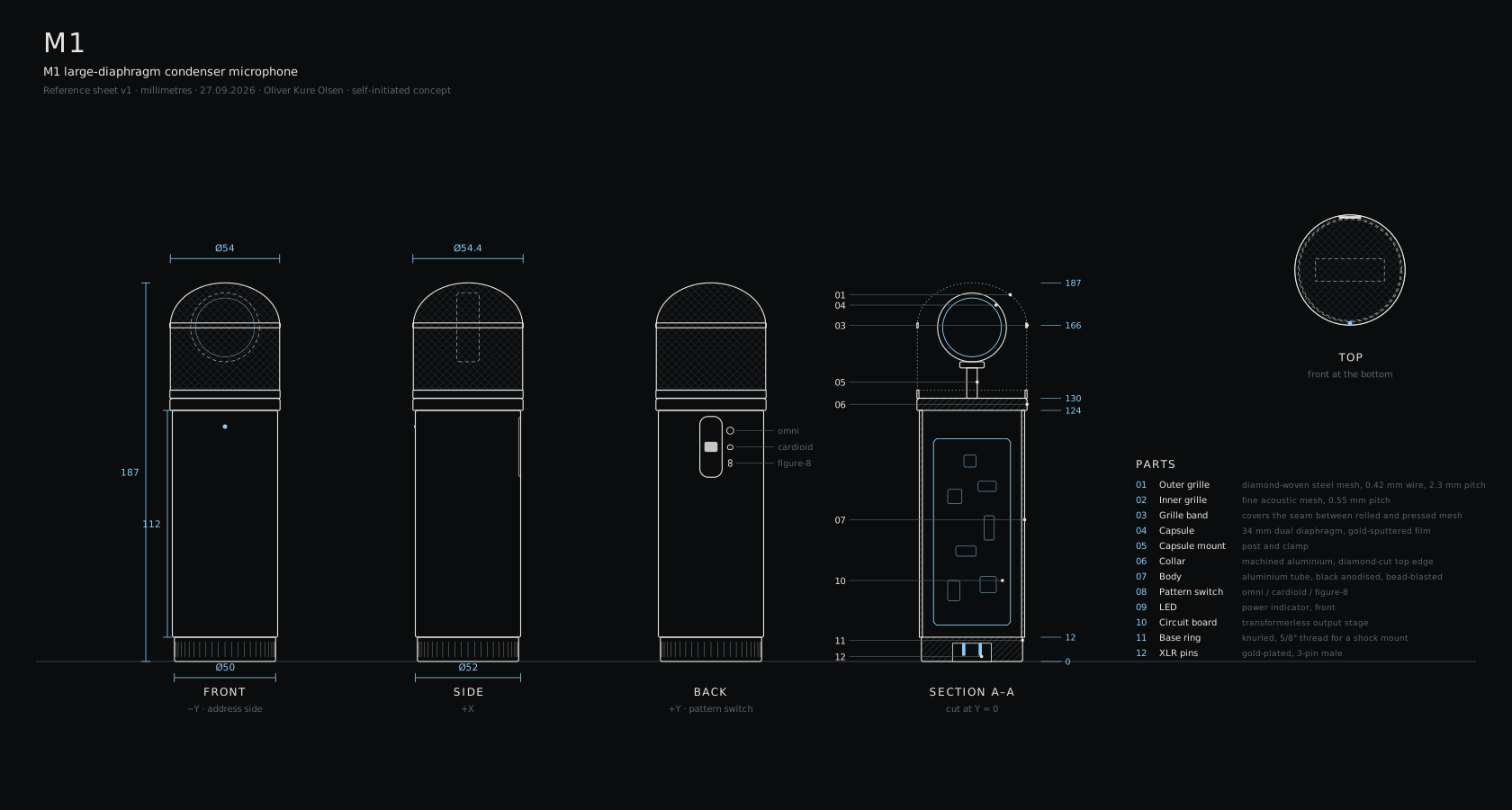
Every part is built by a Python script in Blender from one set of dimensions, the same numbers that draw the reference sheet. Nothing is modelled by hand, so the drawing and the model can't disagree.
02 · Material
Up close.
- Outer grille
- 0.42 mm steel wire, woven in a diamond at 2.3 mm
- Inner mesh
- 0.5 mm acoustic mesh
- Capsule
- 34 mm, gold-sputtered film on both sides
- Body
- Aluminium, bead-blasted and black anodised
03 · Pickup pattern
Three ways to listen.
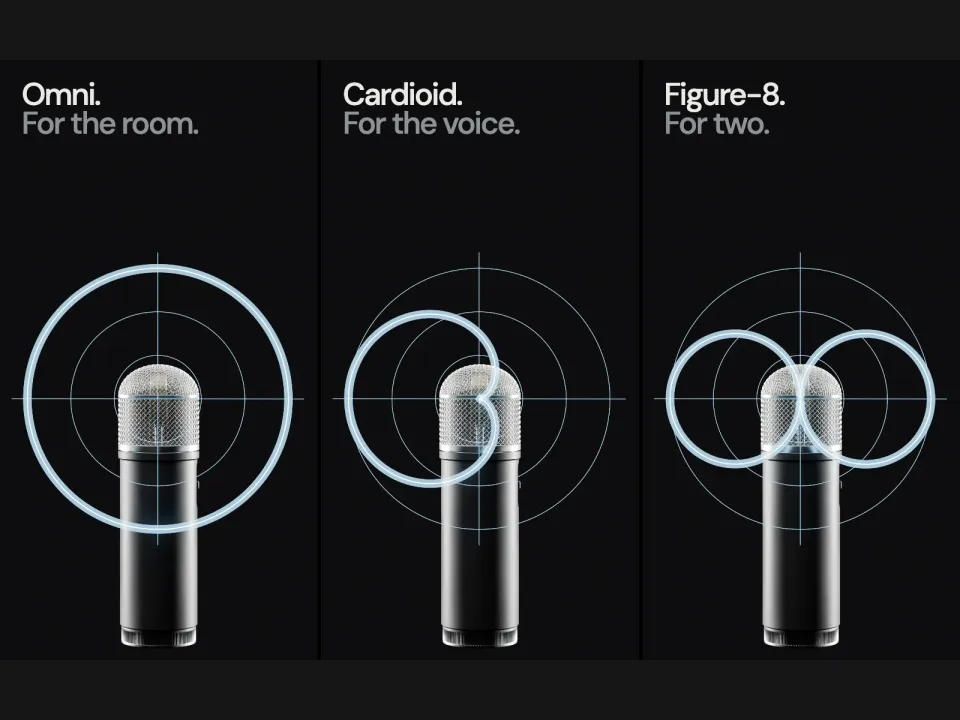
Two diaphragms can be combined into three shapes. Pick one, then drag round the microphone.
04 · Making
Scroll it back to clay.
Behind the scan line the model shows what it is made of: the clay and the contours of the same Blender model, exported as a 1 MB glTF file and lit to match the Cycles renders below.
- Parts, built by script
- 12
- Live model, woven grille included
- 1 MB
- Pickup patterns
- 3
- Hero film, rendered in Cycles
- 13.5 s
- Client
- Self-initiated
- Sector
- Audio
- Role
- Product design, 3D, art direction, development
- Deliverables
- Product design, Reference sheet, 3D model, Studio renders, Hero film, Sound design, Interactive product page
- Tech
- Blender · Python · Cycles · three.js · GLSL · GSAP · Web Audio
- Year
- 2026
The brief
Launch a new studio microphone the way a premium audio brand would, and make people want to hold it before they have read a spec sheet.
The approach
I designed the M1 from a one-page spec and built every part by script in Blender, so the drawing and the model share the same numbers. It is lit like a product shoot for the renders and the film, and the film's sound is synthesised in code from the same keyframes, so every tick, click and note follows something on screen. The same model then runs in the browser, where you can take it apart, switch its pickup pattern and hear what it picks up.
05 · Renders
Designed, modelled, rendered and built by me.
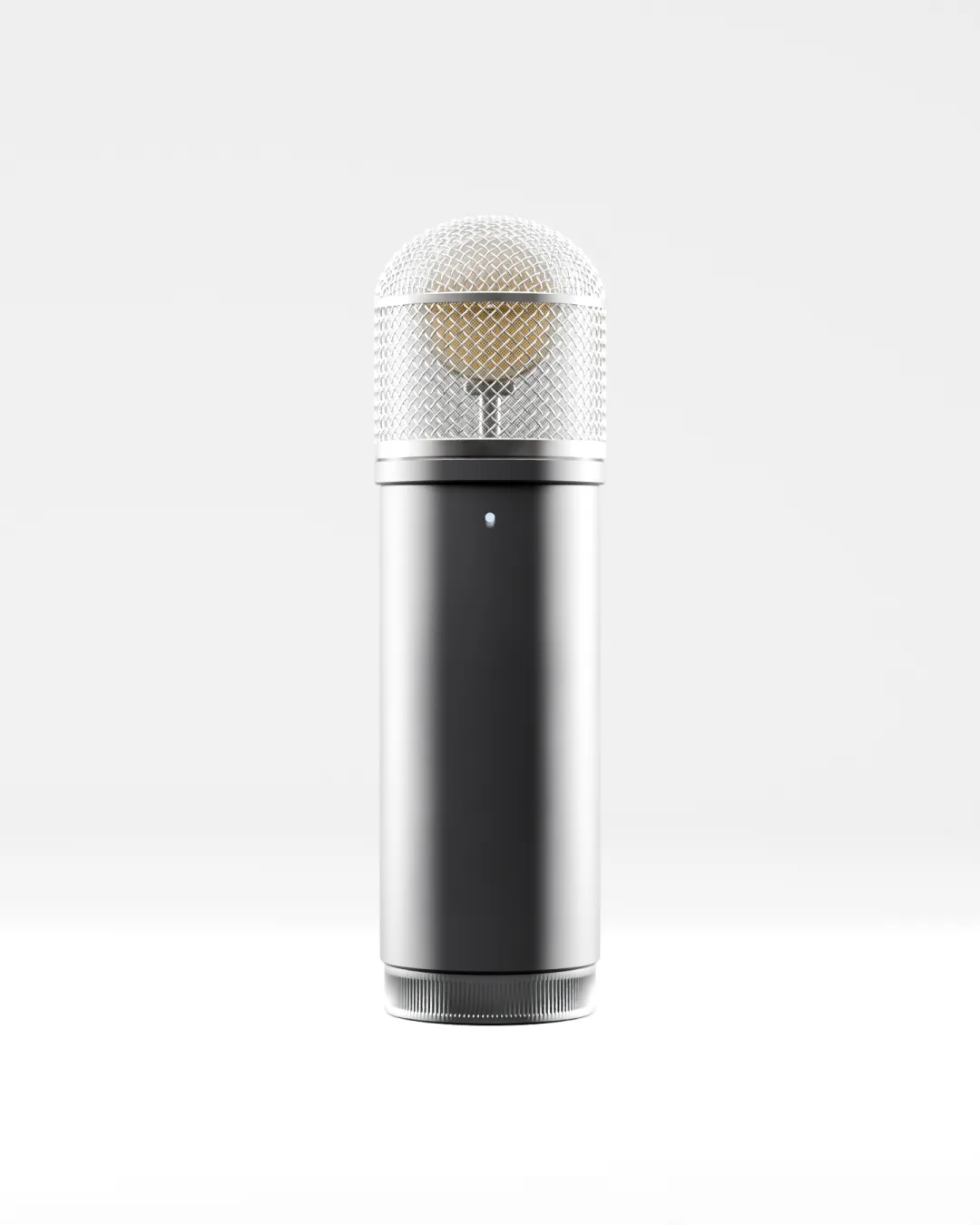
Front, Cycles 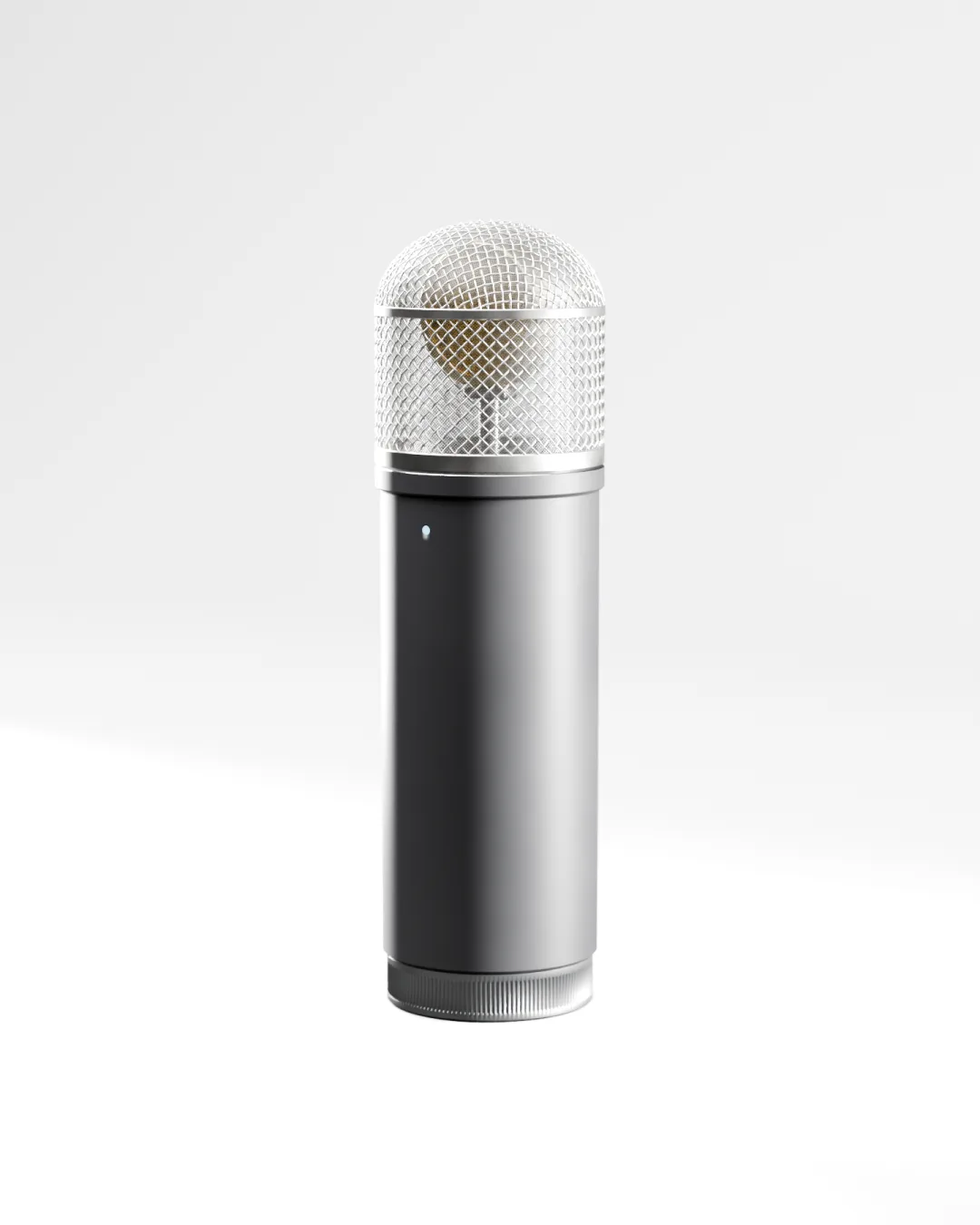
Three-quarter, Cycles 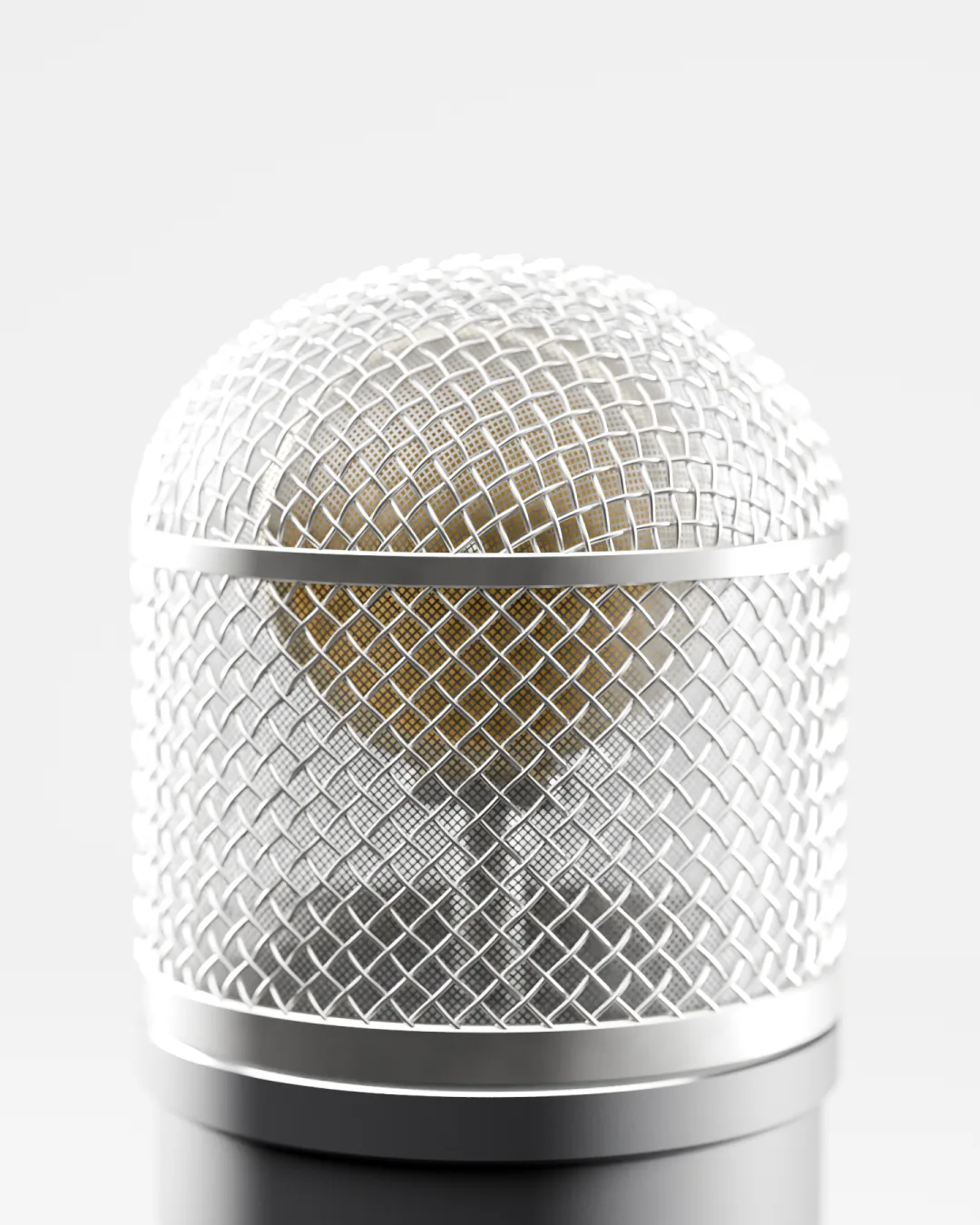
Grille and capsule, Cycles 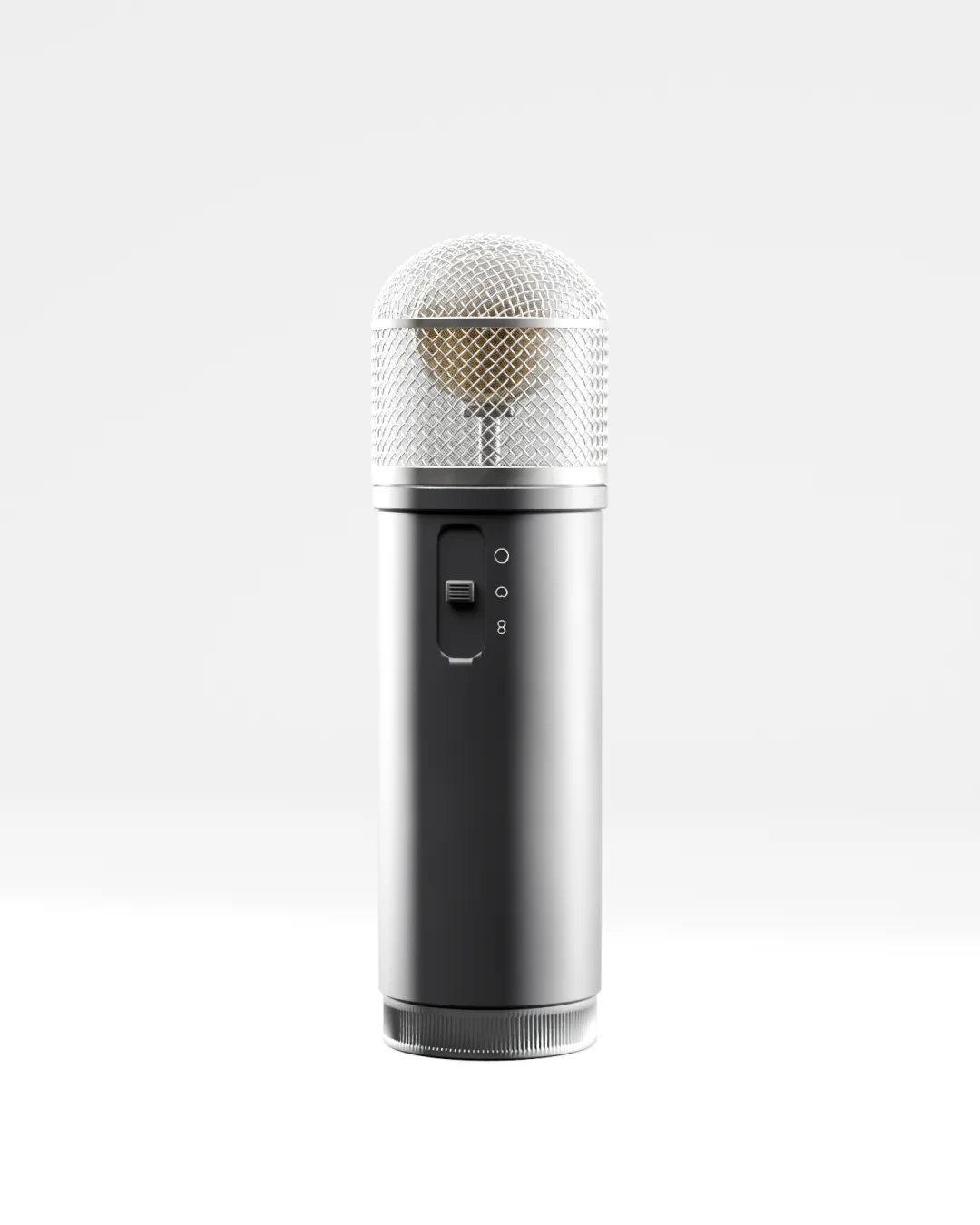
Pattern switch, Cycles
Under the hood
Measured 18 October 2026, Chrome on a MacBook Pro
- Triangles a frame
- 773,450
- The heaviest frame, every pass counted, in 109 draw calls. WebGL2.
- Download
- 9.1 MB
- 1.0 MB before the first frame, 4.7 MB on a phone.
- Slow phone
- 60 fps
- 95 % of frames under 16.7 ms, on a phone screen with the CPU slowed four times.
- If 3D can't run
- The rendered microphone, opened up, in the page, with the chapters as text.
Outtakes
What I tried and dropped, and why.
27 Sep
A launch campaign
Posters for its three pickup patterns made a second case about the same microphone. The object says more on its own.